
Pea Protein Isolate in High-Protein Confections and Vegan Chocolate: Formulation Guide for R&D Teams
In the rapidly evolving functional food sector, confectionery is undergoing a massive nutritional transformation. Consumers are no longer satisfied with empty calories; they expect their chocolates, nougats, and truffles to deliver tangible health benefits, primarily through protein fortification. However, integrating plant-based proteins into low-moisture, high-fat matrices like chocolate presents significant rheological challenges. For R&D teams and confectionery manufacturers, pea protein isolate has become the go-to solution for creating indulgent, high-protein vegan sweets. Extracted from yellow peas (Pisum sativum), this allergen-free ingredient allows formulators to achieve high protein claims without destroying the signature snap, melt, and mouthfeel of premium confections.
Direct Answer: Pea protein isolate functions as a highly effective nutritional fortifier in plant-based confections and vegan chocolates. When properly micro-milled, it integrates seamlessly into lipid-based matrices, delivering a clean, allergen-free protein boost while preserving the structural snap, smooth melt, and glossy finish required in commercial confectionery manufacturing.
The Rheology of Protein-Fortified Chocolate and Confections
Adding protein to a chocolate or nougat base fundamentally alters its flow properties, specifically impacting the yield value and plastic viscosity of the mass. Native plant proteins absorb fat rapidly, often leading to a thick, unworkable paste that clogs enrobing equipment and leaves a dry, chalky sensation on the palate.
Managing Particle Size and Fat Interaction
To successfully incorporate pea protein isolate into a confectionery matrix, R&D teams must strictly control particle size and lipid dispersion. The human tongue can easily detect particles larger than 30 microns, interpreting them as gritty or sandy.
Micro-Milling: Ensure the pea protein isolate is milled to an ultra-fine mesh (100% passing a 100-mesh sieve) before it enters the melangeur or ball mill.
Fat Encapsulation: During the conching phase, cocoa butter or alternative plant fats must fully coat the protein particles. Because pea protein isolates absorb lipids, formulators typically need to increase the total fat content of the recipe by 2% to 5% to maintain proper flowability for molding and enrobing.
Emulsifier Optimization: Increasing the dosage of sunflower lecithin or Polyglycerol Polyricinoleate (PGPR) helps reduce the yield value, allowing the protein-fortified chocolate to flow smoothly into complex molds without trapping air bubbles.
Formulation Matrix: Standard vs. High-Protein Confections
Formulating a protein-enriched truffle, nougat, or chocolate bar requires adjusting standard manufacturing parameters to accommodate the new structural load without compromising the sensory experience.
Confectionery Engineering Adjustments
| Parameter | Standard Vegan Chocolate | High-Protein Chocolate (20% Pea Isolate) | R&D Manufacturing Adjustment |
| Total Fat Content | 32% – 35% | 36% – 40% | Additional cocoa butter is required to lubricate the dry protein particles. |
| Conching Time | 12 – 24 hours | 24 – 36 hours | Extended conching ensures complete fat coating and drives off volatile off-notes. |
| Emulsifier Load | 0.3% – 0.4% | 0.5% – 0.8% | Higher lecithin load is needed to restore flowability and reduce plastic viscosity. |
| Flavor Profile | Cocoa / Vanilla | Strong Cocoa / Hazelnut / Mint | Bold flavor systems help mask any residual leguminous notes from the protein base. |
Grade Selection and Flavor Masking Strategies
When formulating delicate confections, the choice of protein grade dictates the final sensory experience. A slight earthy note can completely ruin the profile of a premium white chocolate or vanilla nougat.
Selecting the Right Isolate for the Matrix
As outlined in our comprehensive pea protein isolate 80% vs 85% grade selection guide, selecting the 85% grade is often critical for high-end confections. The additional washing steps used to achieve the 85% purity level strip away volatile hexanal compounds, resulting in a significantly cleaner, more neutral flavor base that requires fewer masking agents.
For confections with liquid or semi-liquid centers, such as protein caramel or fondant, powder dispersibility becomes a factor. A highly soluble isolate prevents the center from graining over time, leveraging the same principles discussed in our analysis of pea protein isolate solubility and dispersibility in RTD beverages. Additionally, for structured, chewy centers like vegan nougat, the gelling capabilities of the protein provide necessary chew and bounce, similar to its structural function in functional yogurt and dairy alternatives.
Why Confectionery Manufacturers Partner with Amerta Pacific
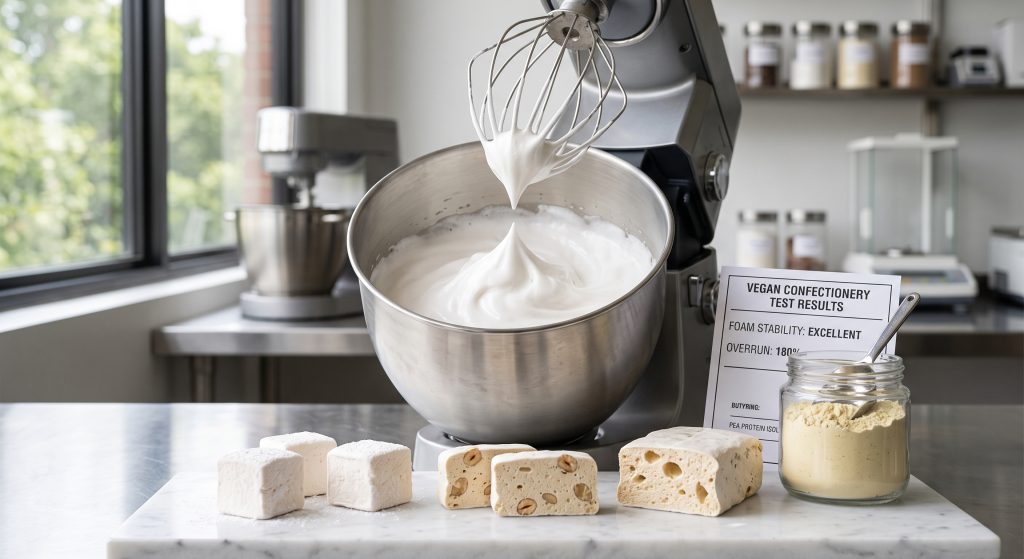
Scaling a high-protein confectionery line requires raw materials that behave predictably under intense mechanical shear and thermal processing. Amerta Pacific supplies premium pea protein isolate engineered specifically to meet the strict textural and sensory tolerances of the global confectionery industry.
The Amerta Pacific Confectionery Advantage
Ultra-Fine Particle Size: Our isolates are micronized to eliminate grittiness, ensuring a silky, smooth mouthfeel in your finished chocolate, truffle, or nougat.
Exceptional Flavor Neutrality: Processed using advanced physical extraction without harsh chemicals, our isolates feature a neutral profile that allows your premium cocoa, fruit, and vanilla notes to shine.
Allergen-Free Guarantee: 100% free from dairy, soy, and gluten, allowing your brand to confidently market to the lucrative vegan and allergen-conscious consumer segments.
Frequently Asked Questions (FAQ)
Q: Can pea protein isolate replace milk powder in vegan milk chocolate? A: Yes. When combined with a plant-based fat source and a bulk sweetener (like rice syrup powder or soluble tapioca fiber), pea protein isolate effectively mimics the solids and mouthfeel of milk powder in vegan chocolate formulations.
Q: Will adding pea protein isolate affect the tempering process of chocolate? A: The protein itself does not participate in cocoa butter crystallization. However, because it alters the viscosity of the mass, R&D teams may need to slightly adjust the tempering curve temperatures and cooling tunnel speeds to ensure a proper Beta V crystal snap.
Q: What is the maximum protein inclusion rate for a molded chocolate bar? A: While it depends heavily on the fat content and emulsifier system, most commercial high-protein chocolates cap inclusion rates around 20% to 25% by weight. Exceeding this limit often results in a paste that is too thick to temper, pump, and mold effectively.
Q: Does pea protein isolate cause graining in chewy confections like caramel? A: If a highly soluble, fine-mesh isolate is used and properly suspended in the fat phase, it will not cause graining. In fact, its water-binding properties can help control moisture migration in chewy confections over a long shelf life.
Elevate Your Functional Confections with Amerta Pacific
Do not let poor protein quality compromise the indulgence of your confectionery line. Amerta Pacific delivers the ultra-refined, fine-mesh pea protein isolate required to create smooth, delicious, and highly marketable functional sweets.
Ready to perfect your high-protein chocolate or nougat formulation? Contact the Amerta Pacific Ingredient Specialists today to request a Technical Data Sheet (TDS), review particle size specifications, or order premium bench-test samples for your R&D lab.