
Pea Protein Isolate in High-Protein Pasta and Rice Alternatives: Extrusion Performance and Texture Guide for Food Manufacturers
As consumers continue to seek nutrient-dense, low-carb, and gluten-free diets, high-protein pasta and engineered rice alternatives have evolved into major growth segments in the food industry. However, replacing traditional durum wheat semolina—which relies on a strong gluten network to maintain structural integrity during boiling—presents significant process engineering challenges. Without the proper protein structure, high-protein pasta and extruded rice grains can suffer from surface sloughing, high cooking loss (cloudy cooking water), and a mushy, chalky texture. For R&D teams, food manufacturers, and purchasing managers, pea protein isolate (Pisum sativum) has become the premier plant-based ingredient solution to overcome these textural limitations in low-moisture extrusion lines.
Direct Answer: Pea protein isolate builds a cohesive protein-starch matrix in extruded pasta and rice alternatives. When subjected to thermal-mechanical shear during low-moisture extrusion, its heat-denatured globulin proteins form a stable network that limits starch leaching, reduces cooking loss (< 6%), and delivers a firm, elastic “al dente” bite that closely replicates traditional wheat pasta.
Extrusion Mechanics: Building a Cohesive Protein Matrix Without Gluten
Unlike traditional wheat pasta extrusion, which relies on room-temperature mixing and cold extrusion pressing, high-protein plant-based pasta utilizes low-moisture thermomechanical extrusion cooking (20% to 30% moisture) to denature and structure the protein.
During extrusion cooking inside a twin-screw barrel, heat and mechanical shear unfold the native pea globulins (legumin and vicilin). As these proteins align along the flow field, they form a continuous, cross-linked protein network that traps starch granules.
Key Processing Benefits in Extruded Grain Systems
Reduced Cooking Loss (Starch Leaching): The thermal-denatured protein matrix locks in starch, preventing excessive amylose leaching during boiling and keeping cooking water clear.
Optimal “Al Dente” Elasticity: Pea protein isolate provides the structural elasticity and springiness needed to prevent pasta noodles or rice grains from collapsing into a soft, mushy mass after cooking.
Low Thermal Shrinkage: Extruded shapes maintain their geometric definition and wall thickness throughout the drying, packaging, and boiling stages.
This thermomechanical texturizing performance utilizes the same cross-linking mechanics found in high-moisture meat production, as detailed in our analysis of pea protein isolate meat analog texture optimization.
Processing Parameter Optimization for Extruded Grain Formulations
Integrating pea protein isolate into high-protein pasta or reconstructed rice grains requires precise calibration of screw speed, barrel temperature profiles, and moisture levels to avoid over-cooking or starch degradation.
Operational Extrusion Guidelines
| Operational Parameter | Standard Wheat Semolina Base | High-Protein Blend (20%–30% Pea Protein) | Engineering Adjustment |
| Flour Blend Hydration | 30% – 32% | 24% – 28% | Lower moisture prevents sticky dough and die clogging. |
| Barrel Temp (Die Zone) | 40°C – 50°C (Cold Press) | 80°C – 105°C (Cooking Extrusion) | Higher heat triggers protein denaturation and thermal set. |
| Screw Shear Profile | Low Shear | Medium / Controlled Shear | Aligns protein fibers without fragmenting the matrix. |
| Drying Profile | 55°C – 75°C (Standard) | 80°C – 90°C (High-Temp Short-Time) | Rapid drying locks in the protein-starch structure. |
| Target Cooking Loss | < 5.0% | < 6.5% | Matches commercial wheat pasta quality standards. |
Formulators scaling up wholesale operations can explore broader bulk ingredient strategies in our guide on pea protein for wholesale meat alternative and bakery applications.
Material Grade Selection: Balancing Viscosity and Cost
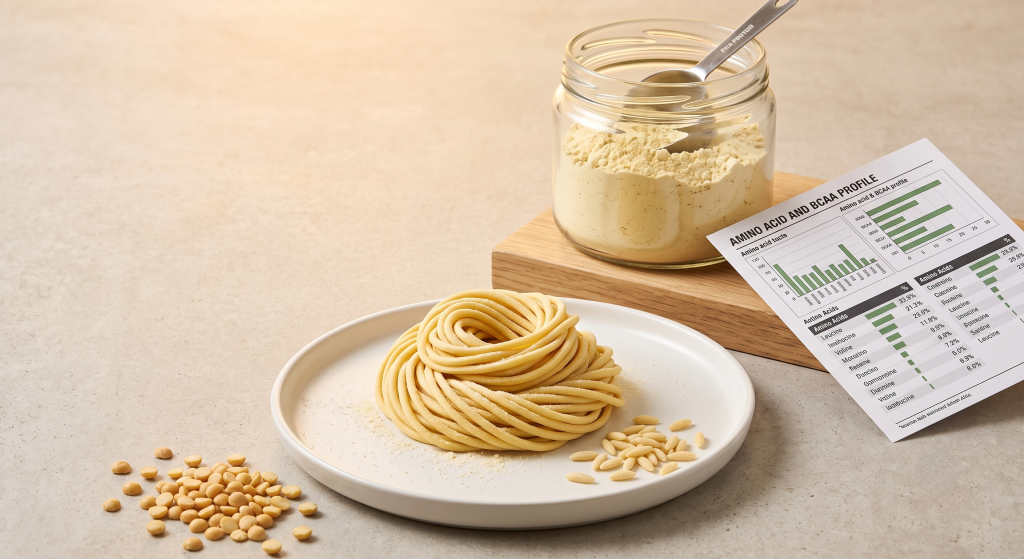
Choosing the right grade of pea protein isolate dictates dough flowability, die pressure, and raw material expenditure. R&D teams can optimize their formulation budget by choosing between 80% and 85% protein isolates.
Selecting the Right Grade for Your Extrusion Line
Pea Protein Isolate 80%: The cost-effective choice for standard high-protein dried pasta, macaroni, and rice grains. The higher native carbohydrate and lipid fraction assists in lubrication inside the barrel, reducing die pressure and motor torque.
Pea Protein Isolate 85%: The ideal choice for ultra-high-protein claims (e.g., 20g+ protein per 100g serving) and delicate, thin-walled shapes like angel hair or vermicelli, where high nitrogen solubility and maximum gelling strength are required.
To determine the ideal grade for your processing budget and target claims, review our comprehensive pea protein isolate 80% vs 85% grade selection guide. For technical insights on our physical water-extraction process, view Amerta Pacific Ingredient Analysis.
Why Food Manufacturers Sourcing from Amerta Pacific
Producing high-protein pasta and rice alternatives demands batch-to-batch consistency. Slight variations in particle size or protein purity can alter dough hydration, resulting in erratic die pressures and inconsistent noodle thickness. Amerta Pacific supplies high-purity pea protein isolate specifically engineered for industrial food production.
The Amerta Pacific Manufacturing Advantage
Standardized Particle Size: Fine, uniform mesh size guarantees rapid, even hydration in high-speed dry-blending hoppers.
Clean Sensory Profile: Our proprietary extraction process removes bitter leguminous off-notes, ensuring a neutral base that lets natural grain flavors shine through.
Global Supply Reliability: We provide volume-backed contracts and complete documentation to support uninterrupted, large-scale factory runs.
Frequently Asked Questions (FAQ)
Q: Can pea protein isolate achieve a 100% plant-based, gluten-free pasta without added gums? A: Yes. When combined with a high-gelatinization starch base (like native tapioca starch or cassava flour), high-purity pea protein isolate forms a strong enough thermal matrix during extrusion to create durable pasta without requiring synthetic gums or binders.
Q: How does pea protein affect the color of extruded rice alternatives? A: Pea protein isolate provides a light cream-to-yellowish hue, closely matching the natural appearance of brown or unpolished white rice grains without requiring artificial whitening agents.
Q: What is the maximum recommended inclusion rate for pea protein isolate in pasta? A: Standard inclusion rates range from 15% to 35% of the dry flour blend. Higher inclusion rates (above 40%) may require minor additions of clean-label starches to maintain dough pliability at the die.
Q: Does pea protein isolate alter the cooking time of high-protein pasta? A: High-protein extruded pasta typically cooks slightly faster (5 to 7 minutes) than traditional semolina pasta due to the pre-gelatinized and structured nature of the extruded matrix.
Elevate Your Plant-Based Pasta Line with Amerta Pacific
Overcome textural challenges, minimize cooking loss, and deliver high-protein pasta and rice alternatives that consumers love. Amerta Pacific supplies high-purity pea protein isolate tailored to meet the strict technical standards of modern extrusion manufacturing.
Ready to optimize your extrusion line and request factory samples? Contact the Amerta Pacific R&D Support Team today to request a Technical Data Sheet (TDS), analyze extrusion parameters, or order bench-test sample kits for your pilot trials.