
Pea Protein Isolate Allergen Management and Cross-Contamination Control: A Facility Audit Guide for Procurement Teams
In modern food manufacturing, allergen control is a non-negotiable operational standard. As food recalls triggered by undeclared allergens continue to rise globally, food brands and contract manufacturers face severe regulatory penalties, financial liability, and brand erosion if cross-contact occurs. Yellow pea protein isolate (Pisum sativum) has gained widespread commercial adoption largely because it is exempt from mandatory major allergen labeling, unlike soy, dairy, wheat, or tree nuts. However, assuming that all pea protein supply chains are inherently allergen-free is a dangerous procurement mistake. For procurement managers, Quality Assurance (QA) teams, and compliance officers, conducting thorough facility audits and establishing strict supplier verification protocols are critical to safeguarding production lines against accidental contamination.
Direct Answer: Effective pea protein allergen management requires rigorous supply chain auditing to prevent cross-contact with major allergens like soy, dairy, and gluten. Key controls include dedicated processing lines, validated CIP sanitation protocols, certified testing (ELISA/PCR < 5 ppm), and strict raw material segregation from farm to packaging.
he Sourcing Vulnerability: Understanding Cross-Contact Risks in Legume Supply Chains
While pure yellow peas are naturally free from major food allergens, the industrial processing and agricultural handling of pulses present numerous points of potential cross-contamination.
Cross-contact frequently originates at the agricultural level, where yellow peas are cultivated in rotational crop cycles alongside wheat, barley, or soy. If shared harvesting machinery, bulk grain trucks, and regional storage silos are not thoroughly cleaned between crop shifts, trace residues can contaminate raw pea shipments.
Further down the processing chain, wet-milling and extraction facilities that process multiple plant proteins on shared equipment run severe cross-contact risks if cleaning validation is incomplete. For brands formulating sensitive recovery diets, zero-tolerance allergen control is mandatory, as detailed in our analysis of pea protein isolate in clinical and medical nutrition.
The 5-Pillar Facility Audit Checklist for QA and Procurement
When evaluating a prospective pea protein manufacturing facility, procurement and compliance officers must look beyond standard ISO certificates. A comprehensive on-site or virtual supplier audit should assess five core operational control pillars.
Essential Audit Verification Criteria
| Audit Focus Area | Critical Verification Standard | Operational Compliance Check |
| Agricultural Traceability | Dedicated or fully sanitized pulse supply routes | Inspect grower contracts and grain elevator cleaning logs for soy/wheat segregation. |
| Facility Zoning & Airflow | Physical segregation of dry blending and milling zones | Verify positive air pressure differentials and dust extraction in powder packaging suites. |
| Equipment & Line Dedication | 100% dedicated pea processing lines or validated CIP | Review Clean-in-Place (CIP) validation data, chemical wash records, and disassembly SOPs. |
| Analytical Testing Protocols | Quantitative ELISA and PCR testing per production lot | Mandate finished lot limits: Gluten < 5 ppm, Soy Protein < 2.5 ppm, Dairy < 2.5 ppm. |
| Employee Training & Flow | Strict traffic control for plant personnel | Audit gowning procedures and dedicated utensil policies between processing areas. |
Implementing these rigorous verification protocols ensures raw material compliance, supporting the detailed analytical checks outlined in our certified bulk supply guide for sourcing premium pea protein isolate 85%.
Cross-Contamination Testing and COA Verification Protocols
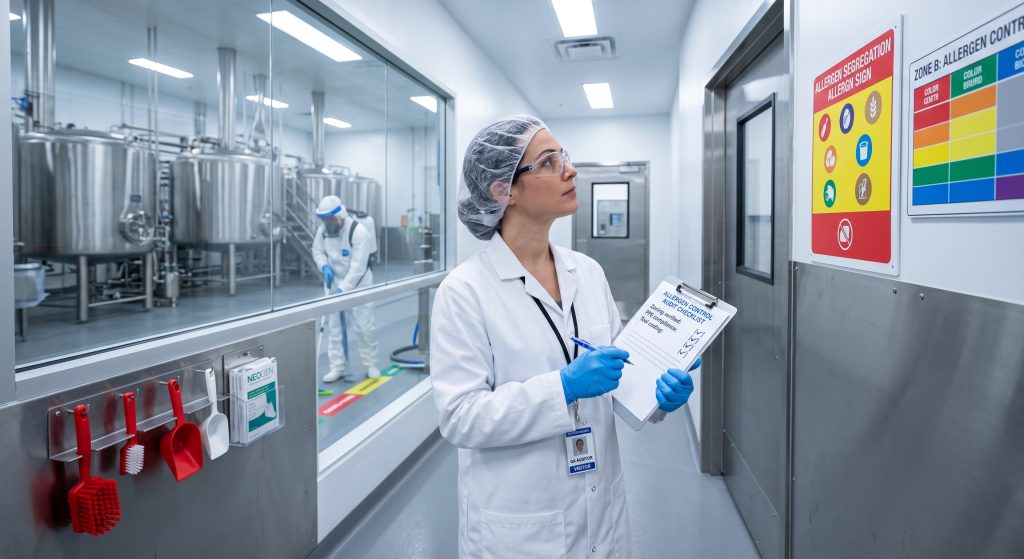
A Certificate of Analysis (COA) is only as reliable as the testing methodology behind it. Compliance teams must ensure that suppliers utilize validated, sensitive analytical techniques rather than generic qualitative swabs.
Mandating Analytical Standards
Enzyme-Linked Immunosorbent Assay (ELISA): Quantitative sandwich or competitive ELISA testing is the global standard for detecting protein-specific residues (such as gliadin/gluten, casein, beta-lactoglobulin, and soy trypsin inhibitor) down to low parts-per-million (ppm) thresholds.
Polymerase Chain Reaction (PCR): DNA-based PCR amplification should be used alongside ELISA testing to detect species-specific DNA, confirming the total absence of undeclared grain or pulse species.
Testing Frequency & Lot Mapping: Every manufactured batch must undergo composite sampling across the beginning, middle, and end of the packaging run to ensure uniform purity throughout the entire lot.
Understanding how to read and challenge analytical test results on vendor documentation is just as essential for protein buyers as it is when evaluating fiber purity, as shown in our resistant dextrin COA and solubility procurement guide.
Managing Legume Cross-Reactivity and Purity Grades
In addition to major food allergens, clinical literature has noted minor cross-reactivity risks between legumes (such as peanut or soy-allergic individuals reacting to other pulses).
Selecting high-purity protein grades minimizes this risk by removing unrefined non-protein fractions and raw agricultural dust. High-performance 85% isolates undergo extensive multi-stage washing steps that eliminate extraneous fractions, providing a purer functional profile compared to standard grades. Procurement teams can evaluate the technical and cost trade-offs of both options in our pea protein isolate 80% vs 85% grade selection guide.
Why QA Teams and Procurement Directors Trust Amerta Pacific
Eliminating allergen risks requires an ingredient partner with complete supply chain transparency, state-of-the-art manufacturing infrastructure, and validated testing protocols. Amerta Pacific supplies ultra-pure, certified non-GMO pea protein isolate manufactured under strict international food safety standards.
The Amerta Pacific Compliance Advantage
Dedicated Allergen-Controlled Facilities: Our processing lines operate under strict allergen management programs, eliminating cross-contact with gluten, soy, dairy, nuts, and eggs.
Lot-by-Lot Certified Testing: Every shipment is accompanied by a comprehensive Certificate of Analysis (COA) featuring third-party validated ELISA screening for major allergens.
Full Farm-to-Port Traceability: We enforce strict agricultural sourcing controls, ensuring our yellow peas are grown, harvested, and transported through clean, segregated channels.
Frequently Asked Questions (FAQ)
Q: Is pea protein considered one of the Big 9 major food allergens? A: No. Pea protein is not classified as a major food allergen under US FDA (FALCPA/FASTER Act), EU (Regulation 1169/2011), or Codex Alimentarius regulations, exempting it from mandatory bold allergen labeling declarations.
Q: What is the maximum acceptable threshold for gluten contamination in certified gluten-free pea protein? A: Under FDA and international standards, products labeled “gluten-free” must contain less than 20 ppm of gluten. However, Amerta Pacific enforces a stricter internal specification limit of < 5 ppm, ensuring safety for highly sensitive Celiac consumers.
Q: How can procurement teams audit a foreign supplier without visiting the site in person? A: Procurement teams can conduct thorough desktop audits by requesting third-party GFSI audit reports (BRCGS, FSSC 22000), validated allergen swab and CIP records, water testing logs, air handling schematics, and batch-specific ELISA test results.
Q: Can pea protein isolate be certified organic and allergen-free simultaneously? A: Yes. Organic certification verifies agricultural practices and non-chemical processing, while allergen testing verifies physical purity. Amerta Pacific provides fully certified organic and allergen-controlled pea protein isolates.
Maximize Your Meat Processing Yields with Amerta Pacific
Improve cook yields, eliminate purge loss, and lead the clean-label shift with premium cassava solutions. Amerta Pacific delivers the standardized, high-purity tapioca starch your processing facility needs to optimize margins and produce superior meat products.
Ready to enhance your sausage formulations and lower purge loss? Contact the Amerta Pacific Meat Science Team today to request a Technical Data Sheet (TDS), review batch testing protocols, or order samples for your facility’s next smokehouse trial.