
Cassava Flour in Batter and Coating Systems for Fried Foods: Crispness Retention and Oil Uptake Reduction for Manufacturers
In the frozen food and Quick Service Restaurant (QSR) sectors, the structural integrity of a fried coating dictates consumer satisfaction. When commercial batters and breadings fail to perform, the result is soggy textures, excessive oiliness, and catastrophic coating “blow-off” during the frying process. For R&D teams and frozen food manufacturers, formulating the perfect batter requires balancing adhesion, texture, and moisture control. Cassava flour has rapidly become a critical functional ingredient in industrial coating systems. Milled from the whole cassava root, this naturally gluten-free flour delivers exceptional film-forming properties, enabling manufacturers to lock in substrate moisture, drastically reduce fryer oil absorption, and maintain a satisfying, audible crunch through prolonged heat-lamp holding times.
Direct Answer: Cassava flour acts as a high-performance binding and film-forming agent in commercial batter and coating systems. By rapidly gelatinizing during the frying process, it creates a rigid, moisture-locking barrier that significantly reduces oil uptake, enhances adhesion, and maximizes long-term crispness retention.
The Science of Crispness: How Cassava Flour Enhances Coatings
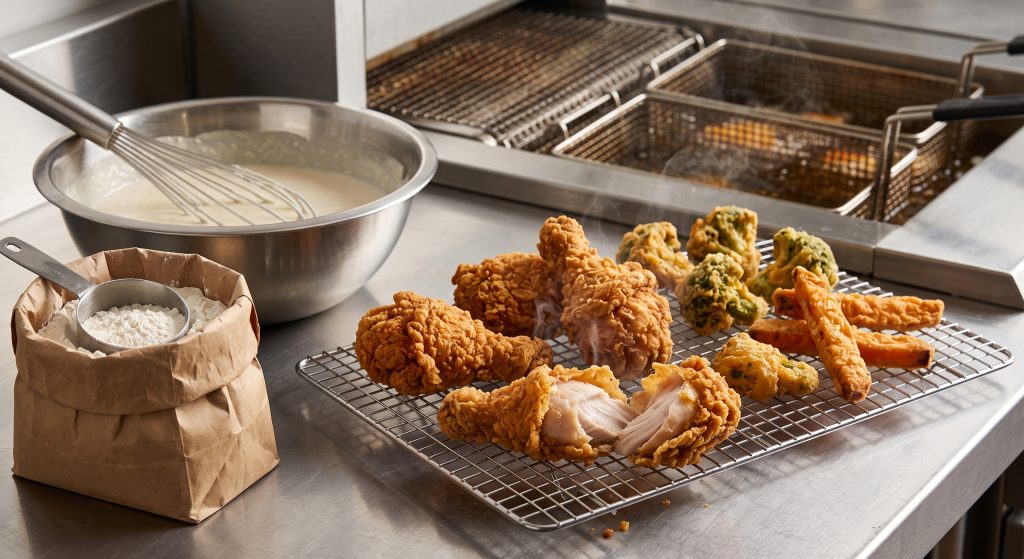
The crunch of a chicken tender or tempura vegetable relies entirely on how the starches within the batter behave when submerged in hot oil. Traditional wheat-based batters often absorb high amounts of moisture from the underlying protein, turning the coating soft and spongy over time.
Film Formation and Moisture Barriers
Cassava flour naturally possesses a high water-binding capacity and a lower gelatinization temperature than wheat. When a battered product hits the fryer (typically between 175°C and 190°C), the cassava starch granules instantly gelatinize and form a continuous, glass-like film around the substrate.
Extended Hold Times: This rigid outer film acts as a thermal shield. It prevents the internal moisture of the chicken or fish from migrating outward into the crust, ensuring the product remains crispy under QSR heat lamps or during home delivery transport.
Golden Visual Appeal: Because it has a clean carbohydrate profile, cassava flour promotes an even, golden Maillard browning without rapidly burning or leaving dark, bitter spots in the fryer oil.
This structural rigidity and elasticity mirror the mechanical benefits applied in commercial bakery, as seen in our breakdown of cassava flour in gluten-free tortilla and flatbread manufacturing.
Reducing Oil Uptake: A Financial and Nutritional Win
High oil absorption is one of the most expensive and nutritionally damaging flaws in commercial frying operations. When a batter is overly porous, cooking oil rushes into the voids left by escaping steam, increasing the overall fat content of the food and rapidly depleting the factory’s fryer oil reserves.
Porosity Control During Flash-Frying
Integrating cassava flour into a clear-coat or tempura batter matrix directly controls surface porosity. Because the flour forms an immediate, tightly cross-linked barrier upon heating, it physically blocks excess oil from penetrating the food.
| Parameter | Standard Wheat Batter | Cassava Flour Enhanced Batter | Manufacturing Impact |
| Oil Uptake Ratio | High (15% – 20%) | Low (< 10%) | Significant cost savings on bulk fryer oil replenishment. |
| Crust Porosity | Open / Spongy | Tight / Brittle | Prevents greasy, heavy mouthfeel. |
| Nutritional Profile | Standard Fat/Calorie | Reduced Fat | Supports healthier front-of-pack consumer claims. |
| Fryer Oil Lifespan | Moderate (High crumb fall-off) | Extended | Cleaner oil requires less frequent filtering and replacement. |
This shift toward highly functional, oil-resistant root ingredients is accelerating industry-wide, heavily influencing the root snacks B2B market disruption against traditional potato chips.
Adhesion and Processing Stability for QSR Suppliers
For frozen food manufacturers supplying QSR chains, the batter must adhere perfectly to the substrate—whether it is a smooth chicken nugget, a flaky fish fillet, or a high-moisture vegetable.
Preventing Coating Blow-Off and Flaking
“Blow-off” occurs when steam trapped between the meat and the crust expands, blowing the breading completely off the product. Cassava flour excels as a pre-dust or adhesion batter ingredient. Its fine particle size allows it to penetrate the microscopic crevices of the raw substrate. As it hydrates, it forms a highly cohesive, sticky gel that essentially glues the outer breading layer to the core protein.
Furthermore, cassava flour boasts exceptional freeze-thaw stability. Products flash-frozen on the factory floor will not suffer from cracked coatings or syneresis when thawed and fried at the restaurant level. This exact thermal and transit stability makes it the ideal base for global distribution, a strategy explored in our guide on utilizing cassava flour for scaling ethnic food manufacturing for export.
Why Frozen Food Brands Source from Amerta Pacific
Formulating high-performance batter systems requires absolute consistency in milling and moisture control. A flour that is too coarse will fail to hydrate properly, leading to gritty coatings and poor adhesion. Amerta Pacific supplies premium, industrial-grade cassava flour engineered specifically to withstand the extreme thermal and mechanical demands of automated frying lines.
The Amerta Pacific Quality Standard
Ultra-Fine Milling: Our specialized grinding processes yield an exceptionally fine mesh, guaranteeing rapid, uniform hydration in commercial batter-mixing tanks.
Controlled Moisture: Dried to a strict maximum moisture content, our flour prevents clumping in your dry-blend silos and ensures accurate dosing into liquid batter systems.
100% Clean Label: Naturally free from gluten, soy, and dairy, our cassava flour allows QSR suppliers to simplify their ingredient decks while maintaining premium functional performance.
Frequently Asked Questions (FAQ)
Q: Can cassava flour completely replace wheat flour in commercial batter systems? A: Yes. Cassava flour can act as a 1:1 replacement for wheat flour in gluten-free batter formulations. In many cases, it actually outperforms wheat by delivering a lighter, crispier texture and significantly lowering oil absorption.
Q: What is the recommended inclusion rate for cassava flour in a pre-dust application? A: For pre-dusting, cassava flour is often used at 100% purity or blended with light seasonings. Its high natural tackiness makes it incredibly effective at adhering to wet substrates like raw chicken or fish before passing through the batter curtain.
Q: Will cassava flour make my fried coating too hard or dense? A: If used at excessively high concentrations in a thick batter, it can yield a glass-like, hard bite. R&D teams typically blend it with a leavening agent (like baking powder) or rice flour to achieve a shattered, delicate, and airy crunch.
Q: Does cassava flour degrade during continuous flash-frying operations? A: No. Because it forms a strong, stable film, it actually reduces the amount of loose crumbs falling into the fryer. This prevents the oil from degrading and smoking prematurely, extending the operational life of your frying medium.
Optimize Your Coating Systems with Amerta Pacific
Do not let soggy coatings, excess oil, or poor adhesion compromise the quality of your fried food portfolio. Amerta Pacific delivers the high-purity, perfectly milled cassava flour required to engineer superior, crispy, and cost-effective batter systems.
Ready to upgrade your batter formulation and reduce oil uptake? Contact the Amerta Pacific Food Science Team today to request a comprehensive Technical Data Sheet (TDS), review rheological specifications, or secure premium bench-test samples for your factory’s next frying trial.