
Tapioca Starch in Bakery Cream Fillings and Custards: Bake-Stable Performance and Syneresis Control for Industrial Bakers
In the commercial bakery sector, developing a premium cream filling or custard requires navigating extreme physical and thermal extremes. A successful bakery filling must pump smoothly through automated dosing nozzles, survive high-temperature baking environments without boiling over, and withstand prolonged refrigerated or frozen storage without weeping moisture into the pastry crust. For R&D teams and industrial food formulators, tapioca starch provides a highly functional, reliable texturizing solution. Extracted from the cassava root, this versatile carbohydrate builds a resilient gel matrix that protects delicate dairy and fruit emulsions, ensuring your fillings maintain their structural integrity from the factory floor to the consumer’s palate.
Direct Answer: Tapioca starch acts as a superior texturizer and stabilizing agent in commercial bakery cream fillings and custards. It provides exceptional bake stability by preventing boil-out during intense thermal processing, binds free moisture to eliminate syneresis, and delivers a smooth, premium mouthfeel.
The Rheology of Bake-Stable Fillings: Heat and Shear Resistance
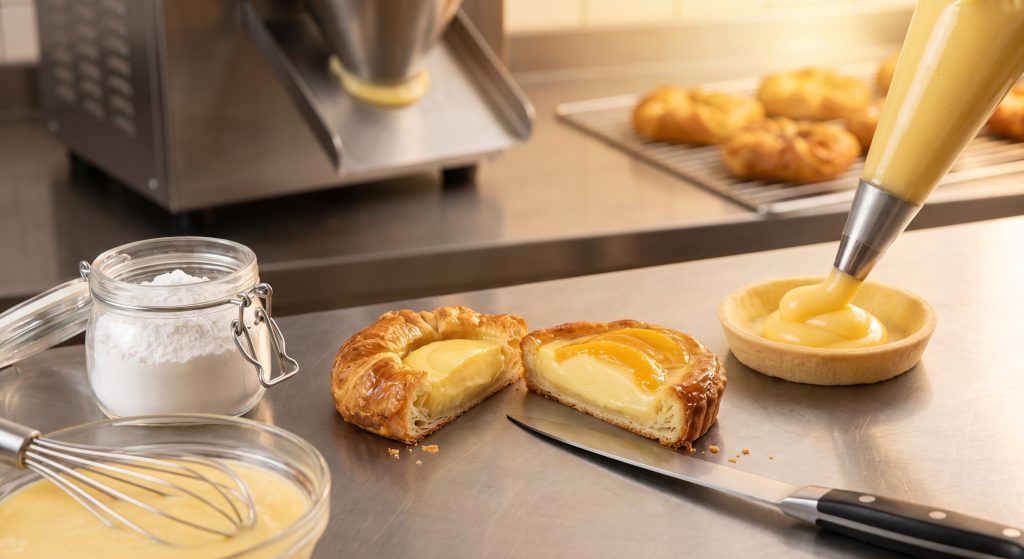
When a filled Danish or croissant enters an industrial tunnel oven operating at 200°C, the internal cream filling is subjected to immense thermal stress. Traditional texturizers, such as native corn starch or wheat flour, often experience thermal breakdown under these conditions, losing their gel structure and causing the filling to liquefy and boil out onto the baking tray.
Preventing Boil-Out During Baking
Tapioca starch possesses a unique amylose-to-amylopectin ratio that behaves differently under thermal load. Once gelatinized (typically between 62°C and 72°C), tapioca starch creates a highly viscous, cohesive matrix. This matrix acts as a thermal insulator for the water and fat trapped within the emulsion.
High-Temperature Viscosity: The starch network remains intact at baking temperatures, maintaining a high internal viscosity that prevents the filling from escaping the dough casing.
Shear Tolerance: For continuous manufacturing lines, the cooked cream must endure the mechanical shear of industrial pumps and depositors. Tapioca starch recovers its viscosity rapidly after shear thinning, ensuring accurate deposit weights without tailing or splashing.
This impressive thermal and mechanical resilience utilizes the exact same structural principles that prevent breakage in tapioca starch instant noodle manufacturing.
Syneresis Control: Maximizing Freeze-Thaw Stability
ultimate test of a filling’s quality. When temperature fluctuations occur, poorly stabilized gels contract, squeezing out free water in a process known as syneresis (or wheying-off).
Managing Moisture Migration Over Shelf Life
Syneresis destroys the physical integrity of a baked good. Free moisture migrating from the custard into the surrounding dough creates a soggy crust and accelerates microbial spoilage. Tapioca starch excels at water binding. Its granules trap large volumes of water, securely locking it within the gel matrix even under freezing conditions.
| Parameter | Standard Corn Starch Filling | Tapioca Starch Filling | R&D Formulation Impact |
| Water Binding Capacity | Moderate | Exceptionally High | Prevents moisture migration into pastry shells. |
| Freeze-Thaw Stability | Poor (spongy texture after thawing) | Excellent (smooth recovery) | Extends shelf life in frozen distribution channels. |
| Gel Structure | Opaque and rigid | Translucent and flexible | Improves visual appeal and prevents filling from cracking. |
| Gelatinization Temp. | 68°C – 80°C | 62°C – 72°C | Reduces energy costs and speeds up cooking times in processing vats. |
Utilizing clean-label native tapioca starch to stabilize these moisture levels aligns with the growing consumer demand for recognizable ingredients, pushing forward the future of clean label cassava as a hero ingredient.
Why Commercial Bakeries Partner with Amerta Pacific
Formulating high-performance bakery fillings requires absolute consistency from your raw materials. A slight shift in the starch’s peak viscosity or moisture content can lead to catastrophic boil-outs or dosing failures on the factory floor. Amerta Pacific supplies premium tapioca starch engineered specifically to meet the strict tolerances of industrial baking and confectionery manufacturing.
The Amerta Pacific Ingredient Advantage
Strict Viscosity Standardization: Every batch is tested using advanced Brabender viscometers to guarantee uniform gelatinization curves, ensuring your cooking vats behave predictably every time.
Microbiological Purity: Bakery fillings are highly susceptible to spoilage. Our tapioca starch undergoes rigorous microbiological screening to ensure low Total Plate Counts (TPC) and zero pathogens, safeguarding your product’s shelf life.
Reliable Global Supply: We maintain robust, traceable supply chains directly from origin, providing volume-backed contracts that protect your manufacturing lines from raw material shortages.
Frequently Asked Questions (FAQ)
Q: Do I need to use modified tapioca starch for bake-stable fillings? A: For extreme applications—such as ultra-high-acid fruit fillings (pH < 3.0) or fillings subjected to numerous freeze-thaw cycles—a cross-linked modified tapioca starch is often required. However, for standard neutral custards and cream fillings, high-quality native tapioca starch provides excellent stability and a cleaner label.
Q: How does tapioca starch affect the clarity of fruit fillings? A: Tapioca starch yields a highly translucent, clear paste when cooked. Unlike corn or wheat starches that turn opaque and cloudy, tapioca allows the vibrant, natural colors of fruit purees and jams to shine through brilliantly.
Q: Can tapioca starch be used in cold-process bakery fillings? A: Standard native tapioca starch requires heat (above 62°C) to gelatinize and build viscosity. If your facility utilizes cold-swelling or instant mix processes, you will need a pre-gelatinized (instant) tapioca starch to achieve viscosity without a cooking step.
Q: What is the standard inclusion rate for tapioca starch in pastry creams? A: Depending on the desired firmness and the ratio of fat to liquid, inclusion rates typically range from 4% to 8% of the total formula weight. R&D teams should optimize the exact dosage based on the mechanical shear of their specific pumping equipment.
Elevate Your Bakery Fillings with Amerta Pacific
Do not let unstable texturizers compromise the quality of your baked goods or the efficiency of your production line. Amerta Pacific delivers the high-purity, standardized tapioca starch required to formulate flawless, bake-stable custards and cream fillings.
Ready to eliminate boil-outs and improve your filling texture? Contact the Amerta Pacific R&D Support Team today to request a comprehensive Technical Data Sheet (TDS), review rheological specifications, or order bench-test samples for your bakery’s next pilot trial.