
Soluble Tapioca Fiber in Infant Formula and Follow-On Milk: Regulatory Limits, Safety Profile, and Sourcing Considerations
Formulating infant formula and follow-on milk is one of the most rigorously controlled disciplines in food science. R&D teams and regulatory affairs specialists must deliver optimal nutritional equivalence to human breast milk while adhering to uncompromising safety, toxicological, and microbiological standards. A critical component of modern infant nutrition is the inclusion of prebiotic dietary fibers that mimic the function of Human Milk Oligosaccharides (HMOs). Soluble tapioca fiber (resistant dextrin) has emerged as a premium, highly tolerated prebiotic solution. Derived from non-GMO cassava starch, it offers gentle digestive benefits, exceptional thermal stability during wet-blending, and a clean safety profile that meets stringent international pediatric guidelines.
Direct Answer: Soluble tapioca fiber is a safe, non-digestible carbohydrate utilized in infant formula to replicate the prebiotic effects of human breast milk. It stimulates beneficial gut bifidobacteria, softens stool consistency, and supports immune development while fully complying with strict pediatric regulatory and microbiological safety limits.
The Safety Profile and Prebiotic Functionality in Pediatric Diets
The infant gastrointestinal tract is delicate and rapidly developing. When selecting a prebiotic bulking agent, formulators must avoid fibers that ferment too aggressively, as these can cause painful colic, gas, and osmotic diarrhea.
Gentle Fermentation and Microbiome Modulation
Unlike standard chicory root inulin or short-chain fructooligosaccharides (FOS), which ferment rapidly in the proximal colon, soluble tapioca fiber features a complex, highly branched molecular structure. This structure dictates a slow, sustained fermentation process that extends throughout the entire length of the large intestine.
For the infant, this means a steady production of short-chain fatty acids (SCFAs), primarily acetate and butyrate, without the sudden gas accumulation associated with rapid fermentation. These SCFAs lower the intestinal pH, creating an inhospitable environment for pathogenic bacteria while selectively nourishing endogenous Bifidobacterium and Lactobacillus species. This foundational gut support directly mirrors the physiological goals discussed in our broader analysis of the science of prebiotics and resistant dextrin in microbiome health.
Improving Stool Consistency
A common clinical challenge with standard casein-dominant infant formulas is hard stool consistency and infant constipation. Soluble tapioca fiber actively increases the water-binding capacity of the digestive bolus. By modifying the osmotic balance in the lower gut gently, it promotes softer, more frequent bowel movements, closely resembling the stool characteristics of breastfed infants.
Sourcing Considerations: Purity, Bioburden, and Organic Compliance
Procurement for infant nutrition relies on “zero-tolerance” sourcing. The margin for error regarding heavy metals, pesticides, and microbiological contaminants is non-existent.
Strict Quality Control Benchmarks
When sourcing soluble tapioca fiber for infant applications, procurement directors must demand Certificates of Analysis (COA) that verify the following ultra-strict parameters:
Heavy Metals: Lead (Pb), Cadmium (Cd), Arsenic (As), and Mercury (Hg) must consistently test below the stringent thresholds set for infant consumption (often < 0.01 mg/kg).
Pathogen Clearance: Total absence of Cronobacter sakazakii, Salmonella, and Enterobacteriaceae in large sample sizes (e.g., 30x10g testing).
Pesticide Residues: Must comply with maximum residue limits (MRLs) for infant foods, typically restricted to limits of quantification (LOQ) near 0.01 mg/kg.
For brands formulating premium clean-label or certified organic follow-on milks, the supply chain must trace back to the agricultural source. Discover how traceable supply chains operate in our overview of choosing an organic soluble tapioca fiber supplier. Further structural and purity insights can be referenced through our Amerta Pacific Ingredient Analysis.
Why Infant Nutrition Brands Partner with Amerta Pacific
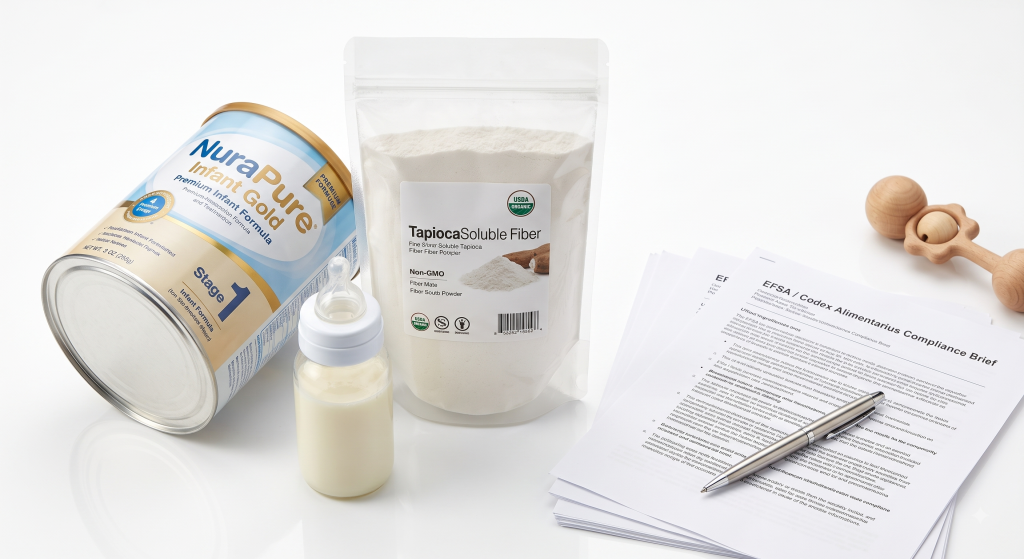
Formulating for the most vulnerable consumer demographic requires a supply partner dedicated to uncompromising food safety, precision engineering, and complete transparency. Amerta Pacific supplies ultra-refined, infant-grade soluble tapioca fiber designed for the world’s most demanding nutrition brands.
The Amerta Pacific Quality Guarantee
Infant-Grade Purification: Our fiber undergoes advanced multi-stage filtration to eliminate residual proteins, sulfites, and heavy metals, ensuring a pristine, hypoallergenic ingredient.
Microbiological Excellence: Produced in state-of-the-art facilities utilizing strict clean-room protocols, ensuring total compliance with global pediatric bioburden standards.
Formulation Support: We provide comprehensive regulatory documentation, allergen statements, and technical datasheets to streamline your product registration and compliance workflows.
Frequently Asked Questions (FAQ)
Q: Is soluble tapioca fiber hypoallergenic and safe for infants with cow’s milk protein allergy (CMPA)? A: Yes. Soluble tapioca fiber is derived entirely from the cassava root and contains no milk proteins, lactose, or major food allergens. It is an ideal prebiotic for specialized hypoallergenic and amino acid-based infant formulas.
Q: How does soluble tapioca fiber affect the viscosity of liquid ready-to-feed (RTF) infant formulas? A: It possesses an exceptionally low viscosity profile. Even at maximum permitted regulatory doses, it will not thicken or alter the mouthfeel of liquid formulas, ensuring smooth flow through standard infant bottle nipples.
Q: Can soluble tapioca fiber be dry-blended into powdered infant formula? A: Yes. The highly soluble, low-hygroscopic powder disperses rapidly in warm water without clumping, making it perfectly suited for both wet-blending/spray-drying and dry-blending manufacturing processes.
Q: Does resistant dextrin cause tooth decay in older infants and toddlers? A: No. Soluble tapioca fiber is non-cariogenic. Because it is not fermented by oral bacteria into enamel-eroding acids, it is safe for follow-on milks and toddler formulas.
Elevate Your Infant Formula Standards with Amerta Pacific
Deliver safe, easily digestible, and scientifically supported prebiotic benefits to your infant nutrition line. Amerta Pacific supplies high-purity soluble tapioca fiber that meets the exacting regulatory and safety demands of pediatric food manufacturing.
Ready to secure infant-grade ingredients for your next formulation? Contact the Amerta Pacific Regulatory and Sales Team today to request a comprehensive Technical Data Sheet (TDS), review our rigorous safety certifications, or order sterile samples for your R&D laboratory.