
Pea Protein Isolate Dosage Guide: How Much Protein per Serving for Different Product Categories
For food formulators and R&D teams, working with pea protein isolate involves balancing nutritional targets with strict sensory and physical boundaries. As consumer demand for clean-label, allergen-free plant proteins accelerates, pea protein has become the foundational macro-ingredient across diverse food categories. However, adding plant protein to a formulation is rarely a simple drop-in replacement.
Every gram of protein added alters your system’s water binding capacity, viscosity, mouthfeel, and flavor profile. To achieve a competitive edge, formulators must determine the optimal pea protein isolate dosage required to hit specific marketing claims—such as “Source of Protein” or “High Protein”—while preserving product texture and taste.
The Direct Answer: Standard Pea Protein Isolate Dosages
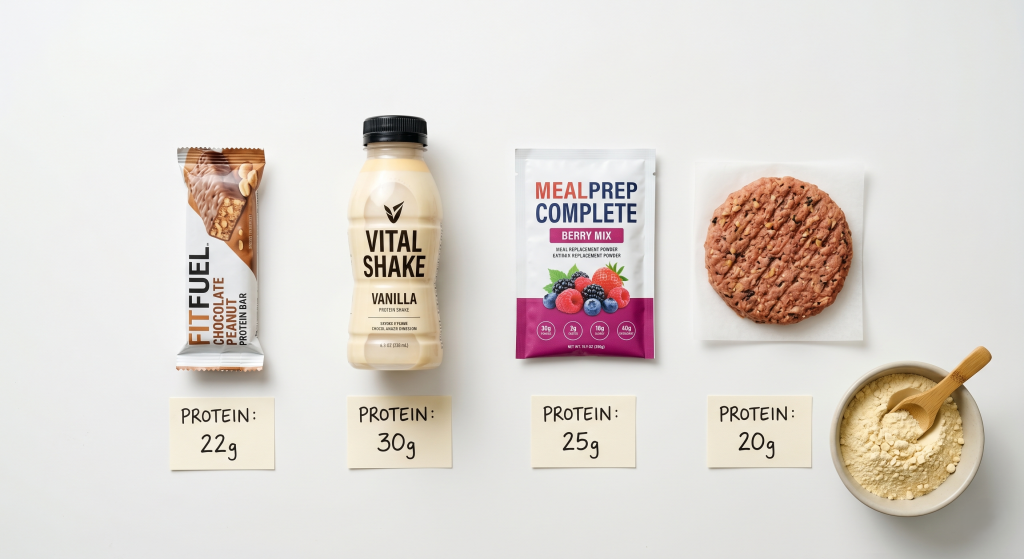
An effective pea protein isolate dosage varies by application: 20 to 25 grams per serving for sports nutrition powders, 10 to 15 grams for ready-to-drink (RTD) beverages, 5 to 10 grams for baked goods and nutritional bars, and 15 to 20 grams for meat alternatives to mimic animal muscle tissue.
Sports Nutrition Powders: Maximizing Amino Acid Delivery
In the powdered supplement category, the primary objective is to maximize the protein delivery per scoop while maintaining rapid solubility and minimizing chalkiness.
Target Dosage: 20 to 25 grams of actual protein per serving (requiring roughly 24 to 30 grams of an 80-85% purity isolate).
Formulation Rationale: This dosage hits the threshold required to deliver approximately 1.8 to 2.2 grams of leucine per serving. Leucine is the critical branched-chain amino acid (BCAA) required to trigger muscle protein synthesis.
R&D Challenges: High doses increase viscosity and surface hydrophobicity. Formulators must incorporate flavor masking systems to counteract the inherent “earthy” or “beany” notes of legumes, often utilizing precise ratios of sodium chloride, sweeteners, and texturizing agents to improve suspension.
Ready-to-Drink (RTD) Beverages: Managing Viscosity and Sedimentation
Formulating liquid protein beverages requires managing protein solubility, thermal processing stability, and rheological behavior over a long shelf life.
Dosage Baseline
For functional liquids and meal replacements, the target is 10 to 15 grams of protein per 250ml to 330ml serving. Going beyond 15 grams in a native plant protein system dramatically escalates fluid thickness, turning a beverage into an unappealing paste.
Stabilization Requirements
Pea protein has an isoelectric point around pH 4.5, where its solubility drops to its lowest level. If you are formulating a neutral RTD beverage (pH 6.5 to 7.0), the protein remains relatively soluble but is highly susceptible to heat-induced aggregation during UHT (Ultra-High Temperature) pasteurization. R&D teams must utilize hydrocolloids, such as gellan gum or carrageenan, to maintain a stable suspension and prevent phase separation or grittiness over time.
Read other article: In 2026, the global dairy-alternative market is projected to exceed $24 Billion, but consumer scrutiny over “ultra-processed” additives like carrageenan, mono-diglycerides, and synthetic lecithins is at an all-time high. Isolate Pea Protein has emerged as the premier clean-label solution. [Read more..]
Category Breakdown: Matrix Behavior and Dosages
| Product Category | Protein Target per Serving | Average Isolate Input (80% Purity) | Primary Functional Role |
| Sports Powders | 20g – 25g | 25.0g – 31.2g | Nutritional Fortification |
| RTD Beverages | 10g – 15g | 12.5g – 18.7g | Emulsification & Nutrition |
| Nutrition Bars | 8g – 12g | 10.0g – 15.0g | Texture & Binding Matrix |
| Meat Alternatives | 15g – 20g | 18.7g – 25.0g | Gelation & Texturization |
| Baked Goods | 5g – 8g | 6.2g – 10.0g | Dough Fortification |
Nutrition Bars and Baked Goods: Preventing Texture Hardening
Integrating pea protein isolate into baked snacks and bars requires a deep understanding of how proteins compete for water within a dough or paste matrix.
Target Dosage: 5 to 12 grams per serving.
The Hardening Phenomenon: A major pain point in protein bar formulation is “shelf-life hardening.” Over months of storage, pea protein isolate continues to migrate and bind free moisture, transforming a soft, chewy bar into a hard, unpalatable block.
R&D Solution: To control this, formulators must pair pea protein with humectants like polyols (glycerol, sorbitol) or low-DE liquid fibers. These ingredients anchor water molecules, preventing the protein from over-hydrating and safeguarding product softness across its commercial lifespan.
Meat Alternatives: Achieving Structural Gelation
For plant-based burgers, sausages, and minced products, pea protein isolate acts as more than a nutritional additive; it is the structural foundation of the food matrix.
The Gelation Threshold
To mimic the chew and tensile strength of animal muscle tissue, meat analogues require a high protein concentration, typically 15 to 20 grams per serving. Native pea protein isolate must be concentrated enough to pass its critical gelation threshold during the thermal cooking phase.
Enhancing Texturization
When exposed to high moisture extrusion (HMEC) or low moisture extrusion, pea protein isolate undergoes structural unfolding and alignment. The globulin proteins (legumin and vicilin) denature and cross-link, forming fibrous structures that replicate meat fibers. To maximize this effect, R&D teams often blend pea protein isolate with specific starches to improve oil emulsification and juice retention during cooking.
Streamlining Ingredient Innovation with Amerta Pacific
Formulating advanced, high-protein products requires raw materials that exhibit exceptional batch-to-batch consistency. Even minor variations in an isolate’s particle size, surface charge, or protein purity can disrupt automated production lines and shift your final nutritional profile.
At Amerta Pacific, we partner with R&D teams and food manufacturers to supply premium, high-purity Pea Protein Isolate designed for seamless factory integration. Our isolate is carefully processed to deliver a clean flavor profile, high solubility, and excellent emulsification performance, minimizing the need for heavy masking agents or stabilizers.
When you source from Amerta Pacific, your formulation team benefits from:
Consistent 80%+ Purity Profiles: Ensuring precise dosage calculations and dependable nutritional labeling.
Neutral Sensory Baseline: Reduced green, bitter notes, simplifying the flavor development process for your R&D lab.
Full Technical Traceability: Complete laboratory documentation, Certificates of Analysis (COA), and strict global compliance tracking.
Frequently Asked Questions (FAQ)
Q: How does pea protein isolate compare to soy protein in terms of formulation functionality?
A: Pea protein isolate functions similarly to soy protein regarding water holding and emulsification. However, pea protein provides a major regulatory advantage as it is entirely free from the major global allergens associated with soy, allowing for cleaner front-of-pack claims.
Q: What is the PDCAAS score of pea protein isolate?
A: Pea protein isolate typically exhibits a Protein Digestibility-Corrected Amino Acid Score (PDCAAS) between 0.81 and 0.93. While it contains all nine essential amino acids, it is slightly low in methionine, which formulators can easily balance by blending it with cereal proteins like rice protein.
Q: Does pea protein isolate react predictably to baking temperatures?
A: Yes. It possesses good thermal stability, meaning it will not break down during industrial baking. However, because of its high water absorption capacity, you must adjust your formula’s total water-to-flour ratio to keep dough from becoming too dry.
Optimize Your Product Formulations Today
Hitting your legal protein targets without compromising your product’s texture or flavor requires a perfect balance of dosage strategy and raw material quality. Selecting a stable, neutral-tasting isolate ensures your product performs predictably under processing heat, shear, and shelf storage.
Ready to elevate your plant-based product portfolio? Contact Amerta Pacific today to connect with our technical ingredient specialists, request premium product samples for bench-top testing, and secure bulk pricing for your next manufacturing campaign.