
The Clean-Label Emulsifier: Using Pea Protein in Plant-Based Milks
The Quick Answer: In 2026, the global dairy-alternative market is projected to exceed $24 Billion, but consumer scrutiny over “ultra-processed” additives like carrageenan, mono-diglycerides, and synthetic lecithins is at an all-time high. Isolate Pea Protein has emerged as the premier clean-label solution. Beyond its nutritional profile, the unique globulin fractions (11S Legumin and 7S Vicilin) in pea protein act as powerful natural emulsifiers. This allows B2B manufacturers to create stable, creamy, and “barista-grade” oat, almond, or soy milks while listing only recognizable, plant-based ingredients on the label.
The Science of "Self-Stabilizing" Milks
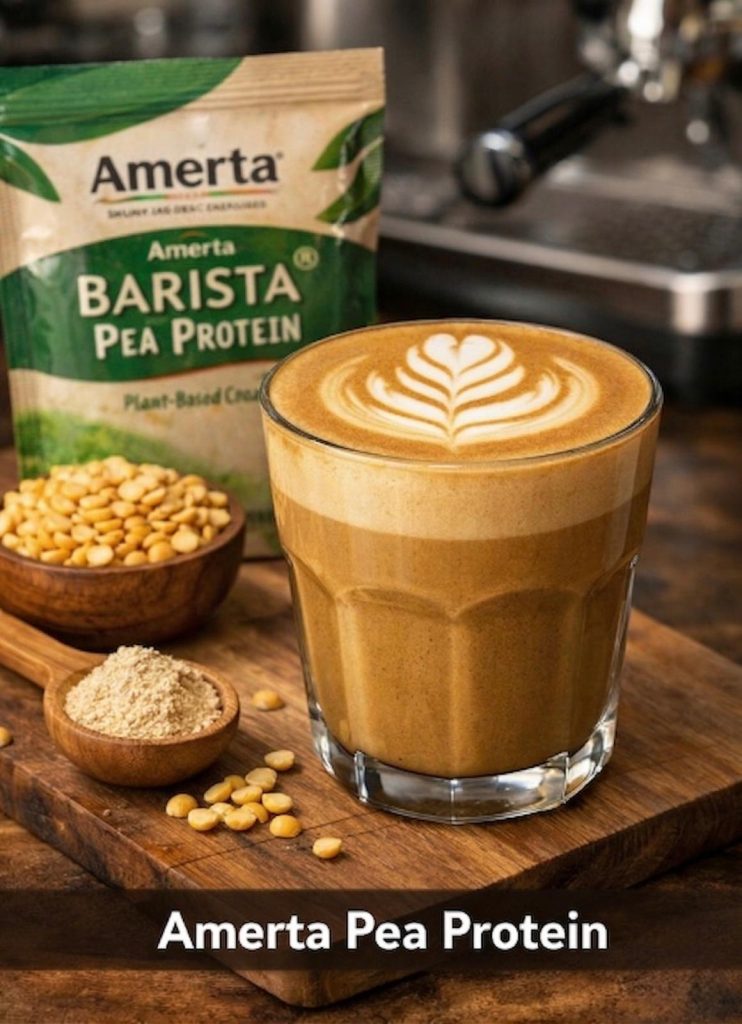
Plant-based milks are essentially oil-in-water emulsions. Without a stabilizer, the fats (from nuts, seeds, or added oils) naturally separate, resulting in an unappealing layer at the top of the carton.
The Globulin Advantage: Pea protein is primarily composed of globular proteins. When processed correctly at Amerta Pacific, these proteins undergo a mild “unfolding” that exposes their amphiphilic nature—meaning they have both water-loving (hydrophilic) and oil-loving (lipophilic) sides.
- The Interface: The pea protein molecules migrate to the oil-water interface, forming a robust protective film around the fat droplets.
- Pickering Stabilization: In 2026, research into “Pickering Emulsions” has shown that ultra-fine pea protein particles act as physical barriers that prevent fat droplets from merging (coalescence), providing long-term shelf stability without the need for chemical gums.
Solving the "Barista Challenge": Foam and Heat Stability
The true test of any plant-based milk is how it performs in a high-acid, high-heat environment—specifically, a cup of hot coffee.
Why Standard Milks “Curdle”: Most plant milks have a pH near their isoelectric point, causing the protein to clump together when it hits acidic coffee. This results in the dreaded “feathering” or curdling.
The Amerta Pacific Solution: By integrating our under-20 micron Isolate Pea Protein, formulators can achieve:
- High Emulsion Capacity: Even at low concentrations (1–2%), pea isolate provides enough surface activity to stabilize the fat content of a “Barista Blend.”
- Micro-Foam Integrity: The protein’s surface tension reduction creates a tight, elastic foam structure that holds its shape for latte art, a critical requirement for the $5B global specialty coffee sector.
- Thermal Resilience: Our pea isolate remains stable during UHT (Ultra-High Temperature) processing, ensuring the milk doesn’t develop a “cooked” off-flavor or lose its emulsifying power on the shelf.
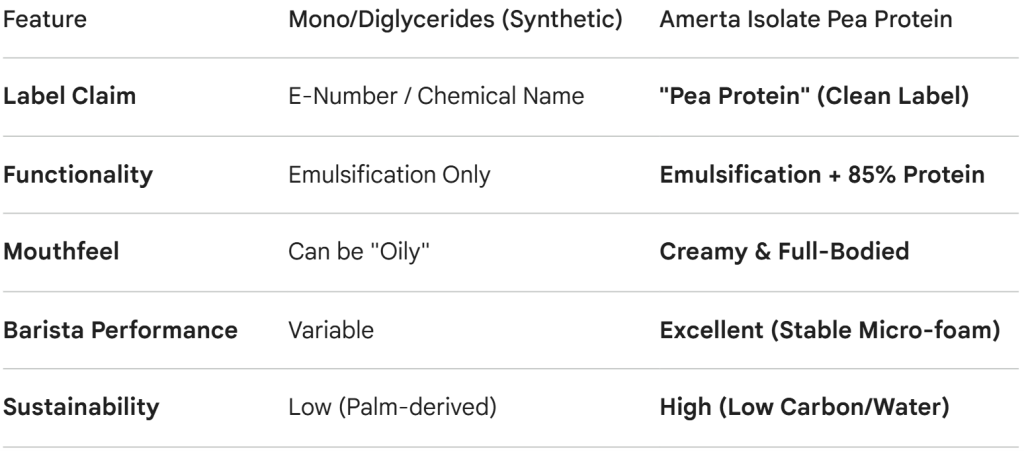
In 2026, “Less is More” is the primary marketing hook. A standard plant milk might have 10+ ingredients; a pea-stabilized milk can often be reduced to just four: Water, Base (Oat/Nut), Pea Protein, and Sea Salt.
The B2B Business Case:
Allergen-Friendly: Unlike soy or dairy-based emulsifiers (caseinates), pea protein is hypoallergenic.
Cost Efficiency: Using pea protein as both a nutritional enhancer and a functional emulsifier allows brands to consolidate their supply chain and reduce the number of specialty additives they need to stock.
Consumer Trust: “Pea Protein Isolate” is a high-trust ingredient. Seeing it on a label signals “High Protein” rather than “Chemical Stabilizer,” allowing for a higher retail price point.
Emulsification Performance: Pea Protein vs. Synthetic Stabilizers
The Future of Fluid Dairy Alternatives
The “Clean Label” movement is no longer a niche—it is the new baseline for global trade. By leveraging the natural emulsifying power of Isolate Pea Protein, Amerta Pacific helps B2B partners stay ahead of regulatory shifts and consumer demands, delivering a product that is technically stable, nutritionally superior, and emotionally resonant.
Stop hiding behind synthetic gums. [Request our Barista-Grade Formulation Guide] and discover how Amerta Pacific Pea Protein can stabilize your next plant-based milk launch.