
Mocaf Flour vs. Tapioca Starch: What Procurement Teams Get Wrong
The Quick Answer: While both originate from the cassava root, MOCAF and Tapioca Starch are fundamentally different ingredients. Tapioca starch is a pure carbohydrate extracted through a washing process, whereas MOCAF is a whole-root flour modified through fermentation. For 2026 manufacturers, the difference is structural: Tapioca starch provides binding and gloss, but MOCAF provides volume, fiber, and “wheat-like” crumb structure. Substituting one for the other without formula adjustments is one of the most common—and expensive—R&D mistakes in the gluten-free industry today.
The Structural Divide: Starch vs. Flour
To understand why they behave differently, we must look at what is left in the ingredient after processing.
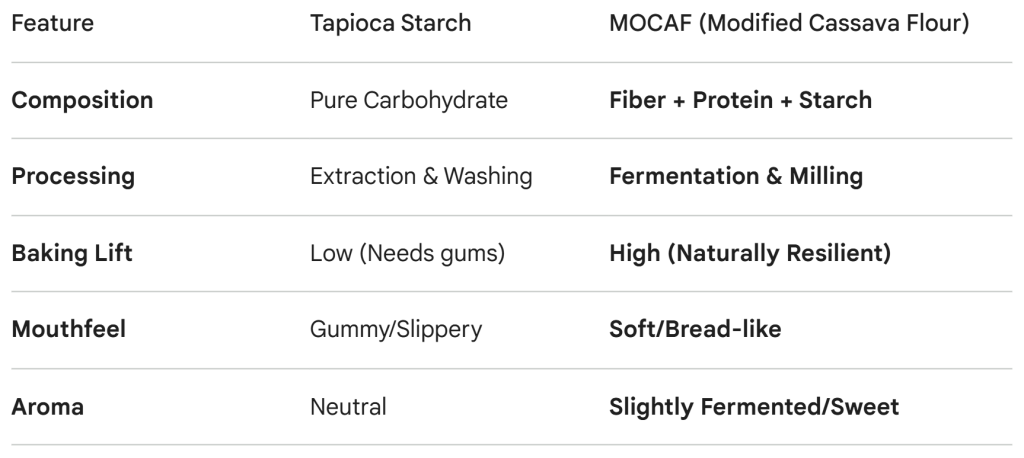
Tapioca Starch (The Extract): This is nearly 100% starch. The fiber, protein, and minerals have been stripped away. It is excellent for thickening sauces or adding “snap” to crackers, but it lacks the structural integrity to hold gas in a rising loaf of bread.
MOCAF Flour (The Whole Root): MOCAF retains the cellular structure of the root, including approximately 2% protein and 7% dietary fiber. The fermentation process breaks down the bitter cyanogenic glycosides and alters the starch granules, making them behave more like the proteins found in wheat.
Visual and Sensory Markers for Procurement
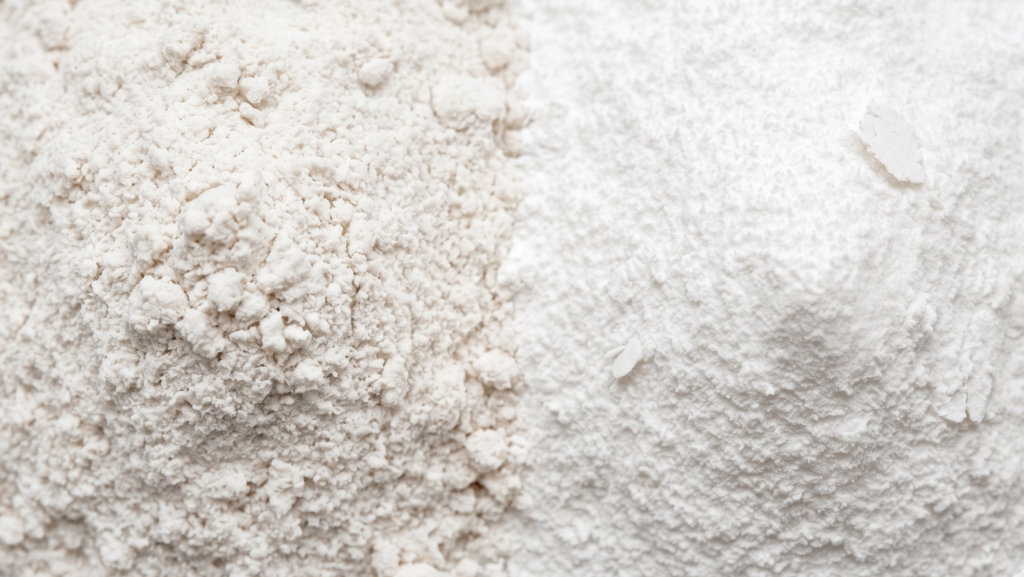
When inspecting samples, procurement teams should look for these three distinct markers:
The Color Test: * Tapioca Starch is a brilliant, snowy white.
MOCAF is a softer, creamy off-white. This is because the natural fibers and minerals remain in the flour, providing a more “authentic” whole-grain appearance to finished baked goods.
The Texture “Squeak”:
If you rub Tapioca Starch between your fingers, it has a distinct “squeak” (similar to cornstarch).
MOCAF feels more like traditional wheat flour—soft, fine, and slightly more cohesive.
The Gel Clarity:
When heated in water, Tapioca starch creates a completely clear, transparent gel.
MOCAF creates a translucent, slightly opaque paste, which is much better for mimicking the internal “crumb” of a slice of bread.
When to Use Which? (B2B Application Guide)
In 2026, the most efficient supply chains use both, but for very different purposes:
Use Tapioca Starch if: You are making high-gloss sauces, fruit fillings, or ultra-crispy snack coatings where no “rise” is required.
Use MOCAF Flour if: You are making bread, noodles, cakes, or cookies. MOCAF provides the “chew” and moisture retention that starch alone cannot provide. It is the primary ingredient that prevents gluten-free bread from feeling “dry” or “sandy.”
Read about: Why Cassava is the 2026 Hero Ingredient
Technical Comparison Table
Conclusion: Precision Sourcing for 2026
Procurement excellence in 2026 is about understanding the functionality behind the price point. While Tapioca starch is a vital commodity, MOCAF is a specialized functional flour. Mixing them up leads to “flat” products and wasted R&D time. At Amerta Pacific, we provide clear technical data sheets for both, ensuring your production line gets exactly what it needs for a perfect finish.
Confused about which cassava derivative fits your recipe? [Request our Ingredient Functionality Map] and get expert guidance for your next production run.