
4 Clean-Label Thickening Agents for Gluten-Free Baking in 2026
The Quick Answer: In 2026, “Clean Label” has moved from a preference to a global regulatory standard. For gluten-free (GF) bakers, the challenge is replacing the structural “web” of gluten without using synthetic gums or chemical E-numbers. The most effective clean-label thickeners today are Native Cassava Starch, Premium Cassava Flour, and Functional Plant Proteins. These ingredients allow B2B manufacturers to achieve high-volume, soft-crumb breads and crispy snacks while keeping the ingredient list simple, recognizable, and “label-friendly.“
The 2026 Shift: Beyond Xanthan and Guar Gums
For years, the gluten-free industry relied on hydrocolloids like Xanthan and Guar gum to provide elasticity. However, as consumers move toward “whole food” ingredients, these gums are increasingly scrutinized for being “ultra-processed.“
The Modern Baker’s Challenge: How do you provide the “chew” of a traditional loaf using only plant-based starches? The secret lies in the synergistic use of native root starches and functional fibers that mimic the water-binding capacity of gluten without the “slimy” mouthfeel of gums.
1. Native Cassava Starch (The Texture Powerhouse)
Cassava starch is the “gold standard” for clean-label GF baking in 2026. Unlike corn starch, which can result in a chalky or opaque finish, cassava provides a unique combination of elasticity and transparency.
- The Science: Cassava granules swell significantly at lower temperatures, creating a viscous matrix that provides “lift” in the oven.
- B2B Benefit: It is naturally grain-free and non-GMO, allowing for premium “Paleo” or “Grain-Free” claims that command a higher retail price.
While native starch provides the “chew,” the flour provides the instant viscosity. This flour has been precooked and dried, meaning it thickens as soon as it touches cold water.
Application: It is essential for high-hydration doughs and batters. It helps prevent “sedimentation” where the heavy starches sink to the bottom of the loaf during the proofing process.
3. Isolate Pea Protein (The Structural Binder)
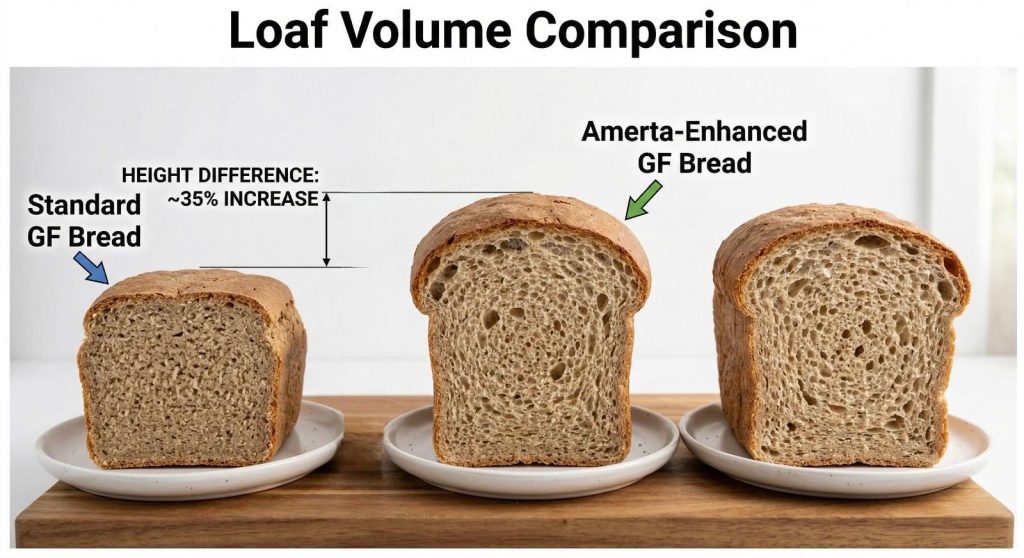
Protein isn’t just for nutrition; in 2026, it is used as a functional thickener. Amerta Pacific’s Isolate Pea Protein helps create a “protein-starch” network that traps gases released by yeast or leavening agents.
The Result: A significantly higher loaf volume and a crumb structure that doesn’t crumble when sliced—a common failure in lower-quality GF breads.
4. Soluble Tapioca Fiber (The Moisture Anchor)
One of the biggest complaints in GF baking is that the bread goes “stale” or dry within 24 hours. Soluble Tapioca Fiber (Resistant Dextrin) acts as a powerful humectant.
- The Science: It binds water tightly in the dough matrix, slowing down the process of starch retrogradation (the hardening of the bread).
- B2B Benefit: It extends the shelf-life of “Fresh-Baked” GF lines by up to 48 hours, reducing food waste and increasing consumer satisfaction.
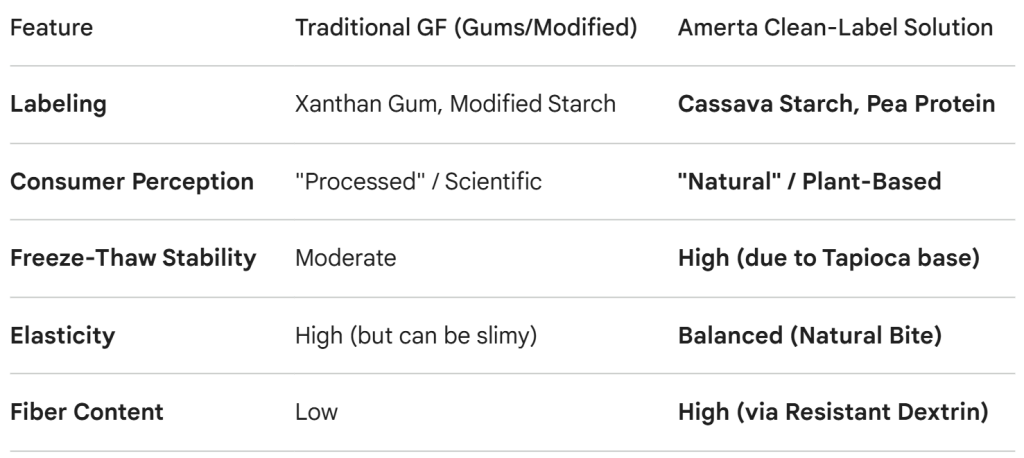
Technical Comparison: Clean Label vs. Traditional Thickeners
Conclusion: Building a Better Loaf
The future of gluten-free baking belongs to ingredients that provide functionality without complexity. By leveraging the natural properties of the cassava root and pea protein, Amerta Pacific helps you build a product that is technically superior and emotionally resonant with today’s “clean-eating” consumer.
Don’t let gluten-free mean “flavor-free.” [Download our 2026 Clean-Label Bakery Guide] and see how our cassava and pea solutions can revolutionize your crumb structure.