
Resistant Dextrin vs. Inulin:
Which Prebiotic is Best for 2026 Brands?
The Quick Answer: While both are classified as prebiotic fibers, the industry shift in 2026 favors Resistant Dextrin (Soluble Tapioca Fiber). This is driven by two critical factors: Stability and Tolerance. While Inulin (typically from chicory root) is a fructan that ferments rapidly in the upper GI tract, Resistant Dextrin is a complex glucose polymer that ferments slowly in the large intestine. For B2B manufacturers, this means a more stable product shelf-life and a significantly better experience for the end consumer.
The Biochemistry of Fermentation: Why "Slow" is Better
To understand why Resistant Dextrin is winning the “Prebiotic War,” we must look at how the human body processes these fibers.
Inulin is a short-chain carbohydrate. When it enters the gut, bacteria break it down almost immediately. This rapid fermentation creates a spike in gas production (carbon dioxide, hydrogen, and methane). For the consumer, this translates to the “bloat factor”—a common complaint that has historically hindered the “High Fiber” snack market.

In contrast, Soluble Tapioca Fiber (Resistant Dextrin) features a unique 1,2 and 1,3-glycosidic linkage that the human digestive enzymes cannot easily break. It travels further down the digestive tract to the colon, where it ferments slowly. This gradual process provides a steady energy source for beneficial bacteria (like Bifidobacteria) without the sudden gas buildup. For a B2B brand, this means you can formulate “gut-friendly” products that actually feel friendly to the user.
Manufacturing Integrity: The pH and Heat Challenge
From a food science perspective, an ingredient is only as good as its ability to survive the factory floor.
The Vulnerability of Inulin: Inulin is highly sensitive to hydrolysis. If you are formulating an acidic beverage (like a functional juice or kombucha) or a product that requires high-heat extrusion (like cereal), Inulin can break down into simple fructose.
The Result: Your “Fiber” content drops, and your “Sugar” content rises on the nutritional label. This can lead to regulatory non-compliance and a “sticky” texture in the final product.
The Resilience of Resistant Dextrin: Amerta Pacific’s Soluble Tapioca Fiber is engineered for the modern manufacturing environment.
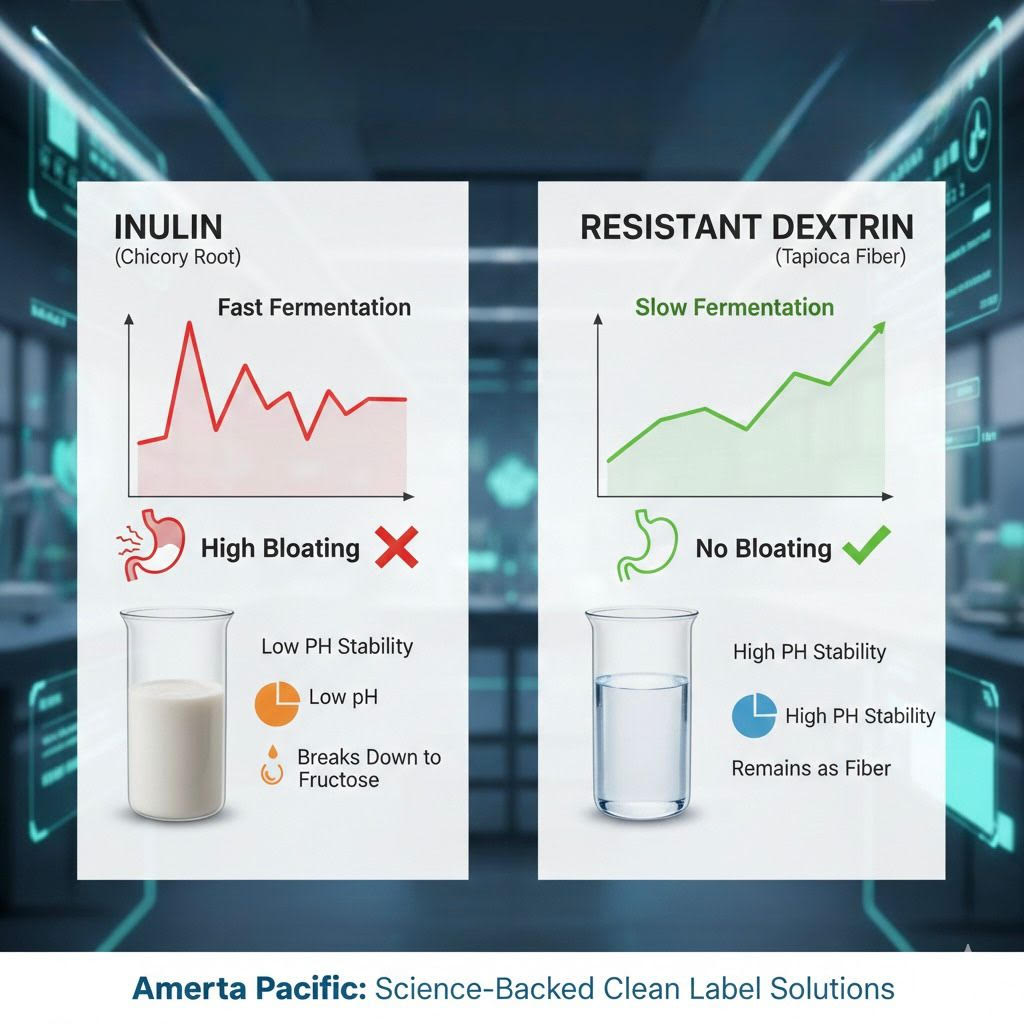
- Heat Stability: It remains stable at temperatures up to 180°C, making it perfect for baked goods and extruded snacks.
- Acid Stability: It does not hydrolyze in low pH environments. Whether in a protein water or a citrus-based gummy, the fiber count you put in the mixer is the fiber count the consumer receives.
- Low Viscosity: Unlike other thickeners, it adds fiber without turning your liquid product into a gel.
Consumer Psychology and the 2026 "Clean Label" Demand
In 2026, transparency is the primary currency of B2B trade. Consumers are increasingly wary of “Chicory Root Fiber” because they have associated it with digestive distress.
The “Corn-Free” Advantage: Much of the world’s resistant maltodextrin is derived from corn. However, the rise in corn allergies and the “Anti-GMO” sentiment has created a vacuum. Amerta Pacific’s Tapioca-based fiber fills this gap. It is naturally non-GMO, grain-free, and carries a “cleaner” perception among premium health-conscious demographics. By listing “Soluble Tapioca Fiber” on your ingredient deck, you are signaling a premium, hypoallergenic choice that justifies a higher price point.
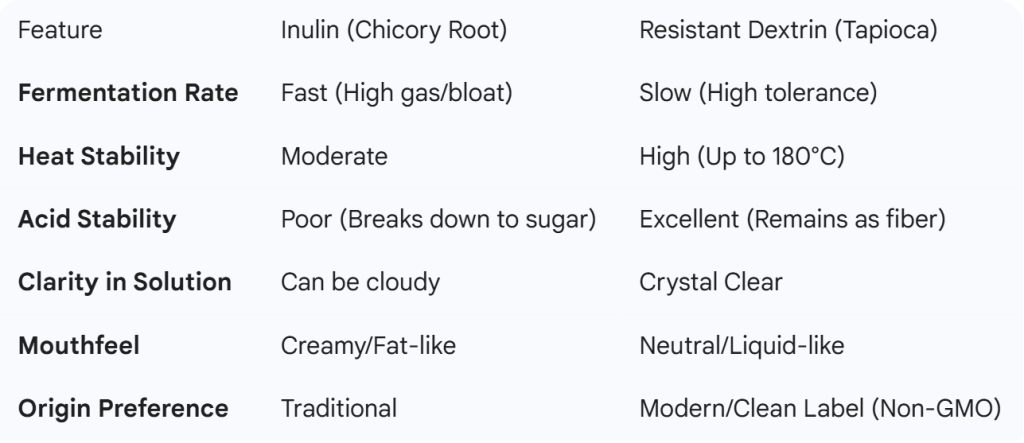
Head-to-Head Comparison Table
Economic Implications for B2B Procurement
Choosing the right fiber isn’t just about science; it’s about the bottom line. While Inulin might occasionally have a lower raw material cost, the “hidden costs” of using it can be substantial:
-
Reformulation Costs: If a batch fails a fiber-count test due to heat degradation.
Consumer Churn: If customers don’t buy the product a second time because it caused digestive upset.
-
Labeling Risks: The cost of updating packaging if the sugar-to-fiber ratio shifts during shelf-life studies.
By choosing Amerta Pacific’s Resistant Dextrin, you are investing in formulation insurance. You get a predictable, robust ingredient that simplifies your supply chain and protects your brand reputation.
Conclusion: The Verdict for 2026
As we look toward the next decade of functional foods, the winner is clear. Brands that prioritize consumer comfort and manufacturing stability will dominate the market. Soluble Tapioca Fiber offers the versatility that Inulin lacks, specifically in the high-growth sectors of functional beverages, keto-friendly snacks, and gummy supplements.
Don’t let unstable fibers compromise your brand’s promise. [Request a Technical Consultation] with Amerta Pacific today and let our lab experts help you transition to a superior, tapioca-based prebiotic solution.